Emotional Maturity in Horsemanship:
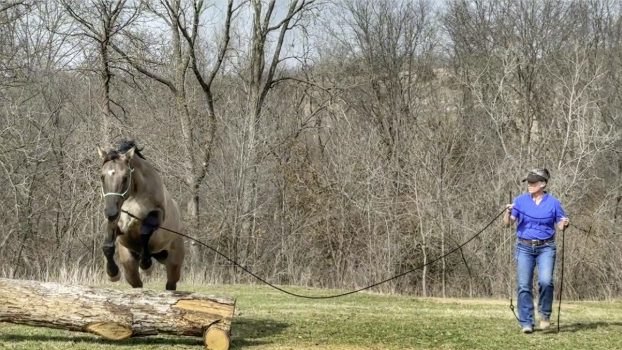
Kristi with Vannah jumping a log
Horsemanship is more than a technical skill. It is a reflection of our emotional maturity, our ability to regulate ourselves, and our willingness to stay connected when things get complicated. Horses feel everything. They respond not just to our aids, but to the quality of our intention. When we cultivate emotional maturity, the entire horse–human relationship becomes clearer, kinder, and far more effective.
Over the years, I’ve learned that the way we focus determines the quality of our communication. When our minds latch onto what we don’t want—don’t spook, don’t brace, don’t push through pressure, don’t leave—we unconsciously center our energy around tension and avoidance. This mindset places us on alert, scanning for mistakes. From there, judgment comes quickly. So does comparison. And once ego enters the arena, clarity leaves it.
Ego alters the conversation with a horse. It disrupts softness, consistency, and our capacity to observe without defensiveness. Ego reacts. Ego corrects harshly. Ego looks outward for fault and inward for justification. Horses never thrive in that space, and neither do we.
A more productive approach—and one that reflects true emotional maturity—is focusing on what we want to build. When our mindset shifts from avoidance to intention, everything softens. We begin to think in terms of:
clarity instead of control
understanding instead of obedience
communication instead of correction
harmony instead of hierarchy
This is the heart of relationship-based horsemanship. When we stay focused on what we want, our bodies stay more organized, our energy becomes more consistent, and our empathy remains intact. We listen more deeply. We refine our timing. We create a learning environment where horses voluntarily tune in because our communication feels safe, readable, and fair.
It’s also important to acknowledge that emotional maturity is not something beginners can be expected to have from the start. These concepts require self-awareness, patience, and a willingness to examine our own patterns—skills that develop over time. Beginners deserve grace. They are learning to manage their bodies, their tools, their fears, and their expectations. Emotional maturity in horsemanship becomes relevant once someone chooses the path to excellence and is ready to pursue that path with integrity, humility, and genuine respect for the horse’s experience. It is advanced work. It asks more of us because our horses deserve more from us.
This mindset also protects us from an all-too-common trap: philosophies that define themselves by how wrong everyone else is. I shy away from any training method that relies on demonizing “the others” as its primary identity. That posture may feel powerful, but it is not emotionally mature. It primes us for comparison, superiority, and rigidity. It leads to ego-driven behavior rather than genuine horse–human partnership.
Real horsemanship does not require tearing others down. It requires clarity, empathy, and the humility to keep learning. Horses don’t need us to win debates. They need us to understand them. They need us to communicate with consistency and kindness. They need us to stay grounded enough to notice their feedback rather than defend our egos.
Emotional maturity is what allows us to respond rather than react. It gives us the bandwidth to stay curious, to adjust our strategies, and to honor the horse’s experience—all of which directly impact their confidence, relaxation, and responsiveness. Those qualities are the foundation of harmonious horsemanship.
Ultimately, focusing on what we want is not wishful thinking. It is disciplined clarity. It keeps us moving toward partnership rather than away from it. It strengthens our leadership without ever sacrificing empathy. And it allows our horses to learn in a way that feels peaceful, connected, and sustainable.
Horsemanship asks for technical skill, yes. But emotional maturity—our willingness to look inward, stay grounded, and remain intentional—is what transforms skill into art. Every horse, in every moment, gives us the opportunity to practice.