Developing Leadership in Horsemanship
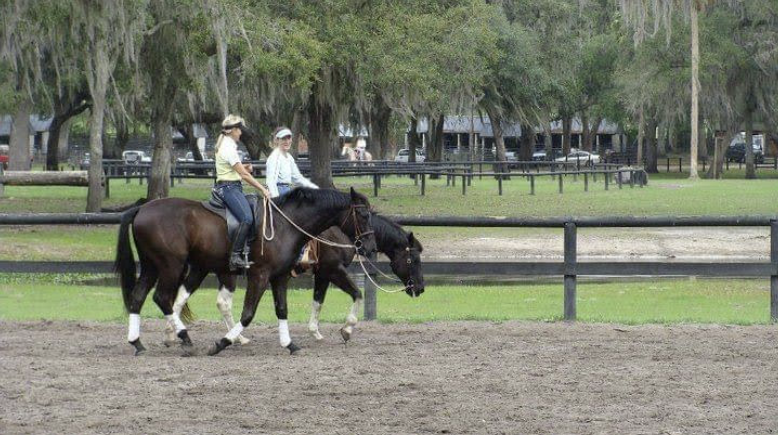
Linda Parelli leading Kristi in a lesson
Leadership in horsemanship is one of the most misunderstood concepts in the horse world. Many riders think leadership is about authority, control, or demanding obedience. Yet the finest horsemen and horsewomen—those whose horses move with softness, trust, and confidence—lead with something very different.
They lead with honor.
Honor shows up in quiet actions: how you reach out a hand, how you set a boundary, how you speak about the horse when they are frustrated or afraid. Honor is the invisible thread that makes a horse feel safe in your presence. It’s also what separates authentic horsemanship from ego-driven performance.
Leadership Inspired by the How To Talk Horse Program
In Linda Parelli’s How To Talk Horse program, leadership is defined as a blend of clarity, consistency, emotional maturity, and affection. We cannot overpower a horse, nor would I want to. We can only influence them through presence, timing, and emotional balance.
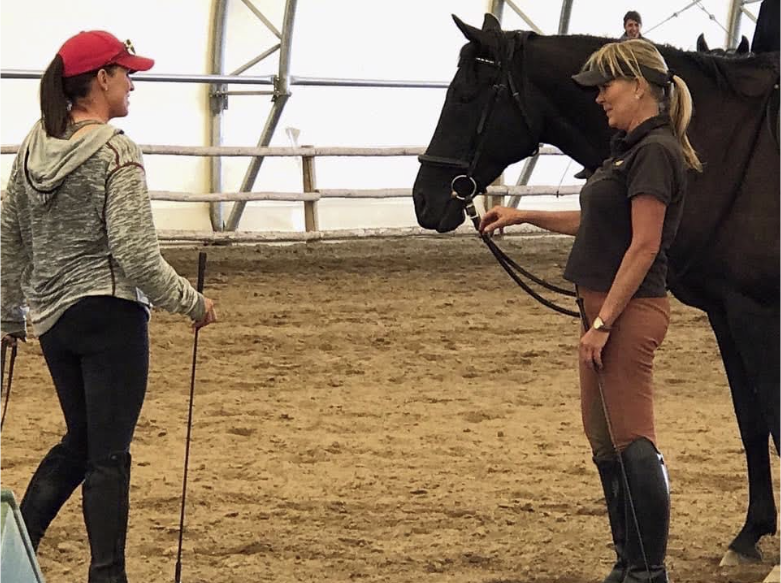
Linda Parelli teaching Kristi about Leadership
Linda teaches that leadership is a relationship. A horse must feel respected, understood, and valued. Without that foundation, yields become mechanical and connection dissolves into confusion or tension.
This philosophy has shaped my own approach. When I hear trainers speak harshly about horses, I find myself wondering: Do you even like horses? Because true leadership—leadership that creates harmony—comes from love, not domination.
Balancing Boundaries and Affection
Some riders fall into the trap of thinking leadership means being sugar-sweet and permissive. Others swing too far toward rigidity and pressure. The truth is far more nuanced. These two things can be true at the same time:
You can insist on a yield and still offer affection.
You can expect responsiveness and maintain softness in your gestures & energy.
You can hold a boundary and remain emotionally stable.
This is the balance where harmony lives—the place where the horse feels both safe and guided.
A Leader Worth Following
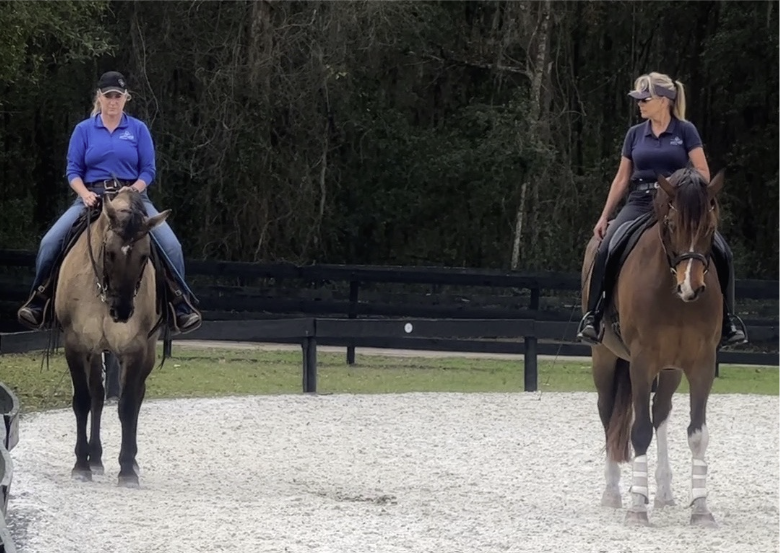
Kristi on Vannah under the instruction of Linda Parelli, founder of How To Talk Horse
The most effective leaders in horsemanship share a set of qualities that have nothing to do with dominance and everything to do with character:
Honor
Integrity
Humility
Compassion
Empathy
Drive
Joy
Consistency
A genuine love for the horse and horse lover
These traits form a kind of internal compass. When they’re present, both the human and the horse grow in confidence. When they’re absent, leadership collapses into coercion.
Two Practices for Developing Leadership
To become the kind of leader a horse willingly follows, we must develop qualities that strengthen our inner stability, presence, and truthfulness.
1. Cultivate Presence
Presence is what allows your horse to trust you. When you slow down, breathe, and truly notice your horse, you create clarity. Horses don’t want perfection. They want congruence—your inside matching your outside. Presence also helps you regulate your nervous system, which in turn helps regulate theirs.
2. Accept Reality
Horses reflect what is happening now. They show you the truth without judgment. Instead of resisting that feedback, embrace it. Accepting reality—whether it’s a brace, worry, distraction, or fear—allows you to respond with wisdom rather than react from frustration. Progress begins when you meet your horse exactly where they are on a daily basis.
Returning to the Heart of Leadership
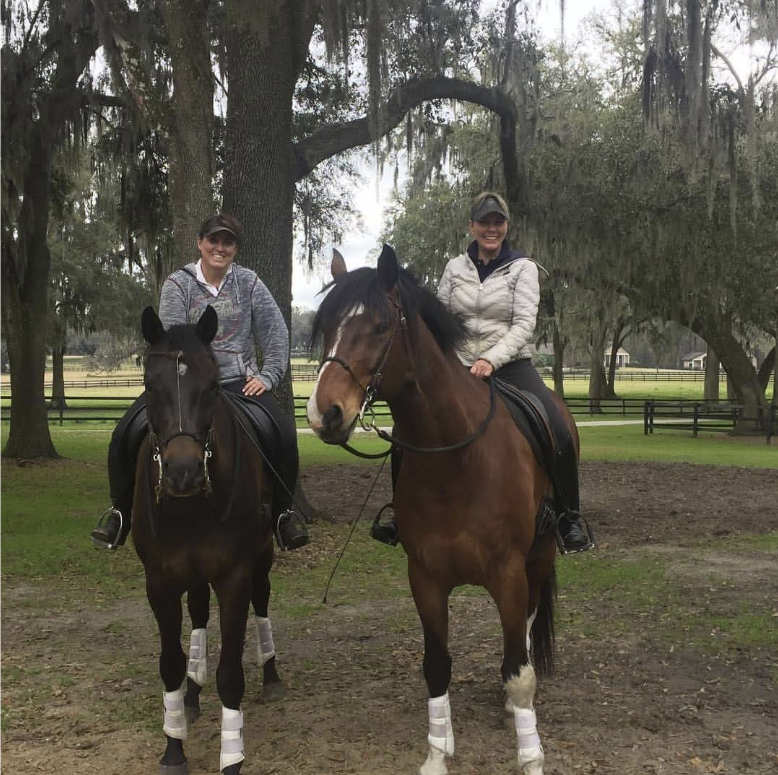
Kristi on Saturi with Linda on Highland
Linda has always emphasized that connection comes first. When a horse feels your intention, your kindness, and your steadiness, they begin to relax into leadership rather than brace against it.
When we let honor guide our actions—when we bring clarity, consistency, affection, and empathy into every moment—we become leaders in the truest sense. Not through force, not through pride, but through relationship.
That is the kind of leadership I strive to develop in myself. And it’s the kind I hope to inspire in others.