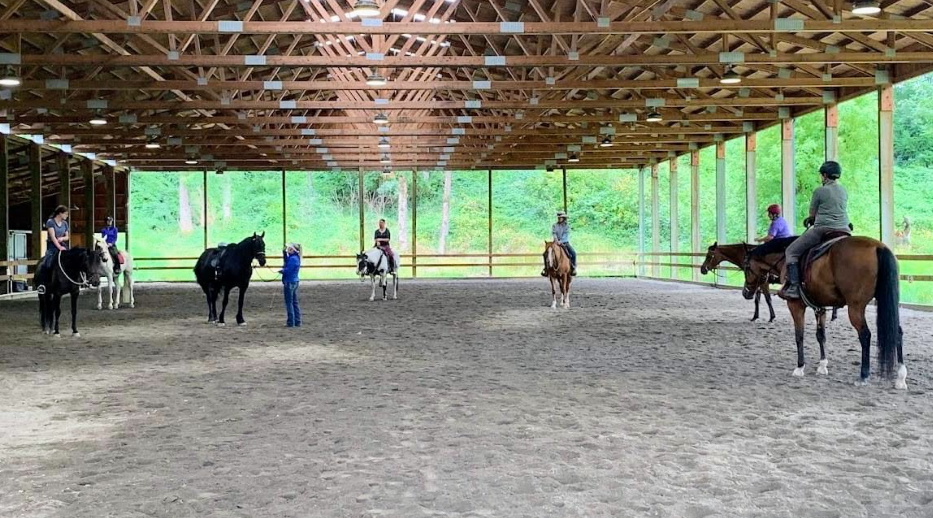
Kristi Smith teaching a Clinic
Learning is not just about gathering information. It is about developing the internal qualities that allow understanding, growth, and adaptability over time. Truly successful learners cultivate a balance of cognitive skills, emotional resilience, and intentional behavior. These qualities shape how we meet challenges, integrate feedback, and continue evolving—long after formal instruction ends.
In a world that changes quickly, the ability to learn well may be the most valuable skill of all.
Curiosity: The Engine of Learning
Curiosity is the quiet force that pulls us forward. It is the desire to understand rather than merely comply. Curious learners ask better questions, notice subtle patterns, and remain engaged even when progress is slow. Curiosity keeps learning alive by turning effort into exploration rather than obligation.
Self-Discipline: Creating Consistency
Learning rarely happens by accident. Self-discipline allows a learner to return to the process repeatedly, even when motivation dips or distractions arise. This is not about rigidity, but about choosing long-term growth over short-term comfort. Consistency compounds.
Perseverance: Staying Present Through Difficulty
Meaningful learning includes moments of confusion, frustration, and uncertainty. Perseverance is the willingness to stay engaged during those moments instead of withdrawing or blaming circumstances. Progress often happens quietly, just beyond the point where many people stop.
A Growth Mindset: Believing in Development
A growth mindset rests on the understanding that ability is not fixed. Skills improve through effort, reflection, and time. Learners with this mindset view mistakes as information rather than failure, making them more resilient, adaptable, and open to feedback.
Time Management: Respecting Energy and Attention
Effective learners understand that time is a finite resource. Prioritizing tasks, setting realistic expectations, and working in focused intervals allows learning to remain sustainable. Good time management supports depth rather than urgency.
Critical Thinking: Going Beyond Memorization
Critical thinking allows learners to analyze information, evaluate credibility, and synthesize ideas into understanding. Instead of accepting concepts at face value, successful learners engage with nuance, context, and consequence. This skill turns information into wisdom.
Adaptability: Learning to Adjust
No single strategy works forever. Adaptable learners are willing to revise methods, update beliefs, and respond to changing conditions. Flexibility keeps learning relevant and prevents stagnation.
Reflectiveness: Learning From Experience
Reflection closes the learning loop. By regularly assessing what is working, what is not, and why, learners gain insight into both their process and progress. Reflection transforms experience into growth.
Effective Communication: Learning With Others
Learning deepens when ideas can be articulated clearly and questions can be asked honestly. Communication allows collaboration, feedback, and shared understanding. Even solitary learners benefit from the ability to express their thinking.
Motivation: Sustaining the Journey
Motivation fuels effort. While external rewards can help, intrinsic motivation—the desire to learn for its own sake—is what sustains long-term engagement. When learning feels meaningful, effort becomes less about discipline and more about alignment.
Learning as a Lifelong Skill
Developing these qualities does not happen all at once. Learning itself is the practice ground. As these traits strengthen, learners become better equipped to navigate complexity, uncertainty, and change with confidence and humility.
Successful learning is not about speed or perfection. It is about relationship—with curiosity, with challenge, and with the process itself. Over time, those who learn well tend to live well too.