8 Steps for Success
Developing Confidence, Connection, and Emotional Fitness with Your Horse
Success in horsemanship is rarely determined by luck, natural talent, or owning the “perfect” horse. The riders who progress with clarity and consistency are the ones who develop emotional maturity, stay curious, and commit to steady, mindful practice. The same qualities that cultivate harmony with a horse tend to elevate every other part of life as well.
What follows are eight essential actions that support long-term progress, resilience, and genuine partnership. These principles are central to evidence-based training, emotional fitness, and sustainable horse–human learning. They also align closely with what many riders are searching for today—calmness, connection, and clarity rather than domination, comparison, or pressure-based tactics.
Show Up with Consistency and Intention
In horsemanship, consistency is the single most reliable predictor of progress. Research in learning psychology shows that small, repeated exposures build stronger neural pathways than sporadic intense effort. When you show up—mentally and physically—you create momentum that supports both you and your horse.
Even on hard days, presence is a declaration of commitment.
Practice:
Set one small, achievable goal for each session. This keeps you from drifting and ensures progress even when motivation is low.
Cultivate Authenticity with Your Mentor and Yourself
Real growth only happens when you’re honest about where you are—not where you wish you were. Pretending you have everything handled blocks the very insight you’re seeking.
Mentorship thrives on truth. When you share your struggles transparently, you invite targeted guidance instead of generic advice.
Practice:
Ask your mentor or a trusted horse friend for feedback on something that challenges you. Stay open to their perspective; it may reveal the next step forward.
Set Boundaries That Protect Your Energy—but Let Progress Evolve Them
Healthy boundaries keep you safe, organized, and emotionally grounded, but they cannot remain fixed if you want to grow. As your skills increase, the edges of your comfort zone should stretch with you.
Practice:
Identify one habit or belief that might be holding you back. Challenge yourself to stretch slightly beyond it in your next training session.
Train Gratitude the Same Way You Train Skills
Gratitude changes brain chemistry. Studies across psychology and behavioral science confirm it increases resilience, improves learning retention, and reduces stress—three traits horses read with uncanny precision.
A grateful rider becomes a more emotionally regulated rider.
Practice:
After every ride or groundwork session, name three things that went well, no matter how small.
Embrace Vulnerability—Learning Is Messy by Design
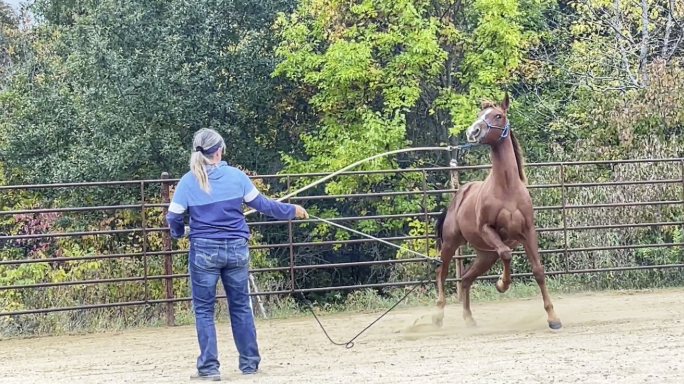
Mistakes are not markers of inadequacy; they’re data.
Mistakes are not markers of inadequacy; they’re data. Neural pathways strengthen through trial and error. Horses are excellent teachers, but they reveal our gaps bluntly and without apology. Emotional maturity is required to stay open through those moments.
Practice:
When you fumble, say out loud, “This is part of learning,” and get curious instead of critical. Ask yourself, “What would I like to do better next time?”
6. Release Perfectionism and Study Your Emotions Instead
Perfectionism freezes learning. Curiosity unlocks it.
Instead of trying to control every detail, focus on what your emotions are telling you. Frustration often reveals confusion. Fear often indicates a missing skill. Impatience points toward unclear communication.
Your inner landscape is part of the training session.
Practice:
When you feel stuck, ask: “What is this moment teaching me?”
This keeps you oriented toward growth rather than self-judgment.
7. Build Shame Resilience to Strengthen Your Learning Capacity
Shame shuts down the prefrontal cortex—the part of the brain responsible for learning, reasoning, and problem-solving. Horses feel the shift immediately.
Resilience means not letting shame define the story.
Practice:
When embarrassment or self-doubt surfaces, pause and reframe it. You are learning. Every rider is.
8. Leave It All on the Field—Engage Fully, Learn Fully
Progress does not require perfection, but it does require engagement. Horses respond to clarity, effort, and emotional presence. When you give your best with integrity, your horse feels it.
Practice:
At the end of each session, ask: “Did I give my best today?”
If not, identify one adjustment for next time.
The Real Path to Success in Horsemanship
When riders embrace consistency, authenticity, emotional resilience, gratitude, and curiosity, they create a partnership that is strong, adaptable, and deeply connected. These eight actions are not quick fixes; they are habits that shape who you become as a horseperson and as a human.
By choosing this path, you build a mindset that nurtures harmony, confidence, and joy—for both you and your horse.
This is the work that lasts.